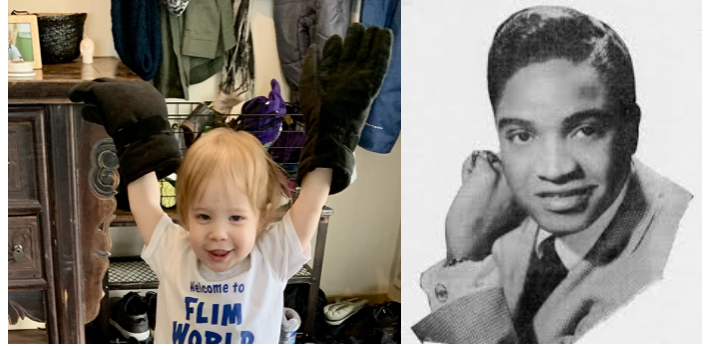
The ’60s were a mixed blessing, maybe more mixed than blessing. But as critically charitable teens often told Dick Clark, the kids could dance to it. One kid I know still does.
Babysitting my 20-month-old grandson James, I sometimes play an oldie that might inspire him to dance or run around. Though his dad isn’t thrilled about my regressive Boomer influence, James has found danceable rhythms in the Beach Boys and other black-and-white fossils.
Recently he responded positively to an old clip of Jackie Wilson performing Baby, Workout on Shindig. As Wilson sang and danced, I didn’t switch to my camera soon enough to catch James’ dance-along, which featured some nice shoulder action. But I did video his curtain call.
Jacked up on Jackie and a juice box, the boy grabbed my winter gloves, did several yipping laps around the kitchen island and extemporized on his favorite “apple dance.” This clip is edited down, as James would probably prefer someday.
The performance that revved James up is below. It was 1964, though YouTube identifies it as 1965. Wilson’s handle was “Mr. Excitement” but could have been “Greatest R&B Singer Ever.” His brief teenage stint as an amateur boxer is reflected here in mock jump rope training steps. Jackie’s dance moves are so athletic that the Shindig Dancers look challenged to keep up with him. (They’re doing their best, but they’re white.) His singing is stylishly phrased and, as the boxing kudo goes, punches above his weight class.
As Jackie instructs Ahhhh, kinda move up, spotlights reveal backup-singer heaven. A quick cut-in shot shows the great Darlene Love — featured 49 years later in the excellent doc Twenty Feet from Stardom — beaming while holding up three fingers as The Blossoms belt out third…step! Another quick cut-in shows four gentlemen in conservative suits, The Chambers Brothers, in the early days of their transition from reverent gospel to flamboyant soul, singing fourth…step!
With the workout getting more worked up, the show’s earlier acts are sent to join in. Bobby Sherman and Jay & The Americans sport Lawrence Welk-type smiles. But looking right at home on Jackie’s stage are the aptly named Righteous Brothers, with Bobby Hatfield dancing up a small storm.
A performance by Willy Nelson was credited, to my amazement. Nelson seemed not visible during the finale, and I briefly wondered whether he’d stayed backstage smoking something. Then I checked and learned this Willy was not the Willie who a few years earlier had written the great ballad recorded by Patsy Cline, Crazy. Earlier in the show, this Nelson performed a one-phrase, jump rope-type song while actually jumping rope (in extremely un-Jackie style) with two Shindig dancers, no kidding.
The mega-motley range of ‘60s pop music seems a planet or two distant from today’s narrowly targeted commercial products. One week in 1964, a Top 40 chart included a “ridiculous to the sublime” gamut of The Singing Nun, Andy Williams, The Trashmen, Dion, Martha and the Vandellas, and Ray Charles. The slots could have consecutive hits by such galactically different performers as, say, Sinatra and Brenda Lee, or Vince Guaraldi and The Who. (My dad liked to deadpan, “The Who?”)
Hit-makers not only seemed to migrate from different points in the universe, some of them challenged human understanding. As an example, search The Trashmen’s Surfing Bird, which reached #4. Ridiculous, sublime, maybe both?
Aside from the assassinations, a disastrous war, two terrible presidents, nationwide anger issues, Jello salad served with Tang, bell bottom pants, The Flying Nun, San Francisco’s “gentle people with flowers in their hair,” non-prescription drug problems, and the emergence of Neil Diamond, the ’60s were OK. Quite a workout.